Tuesday, 19 September 2017

The NEC Goes to Oslo! The 2017 European Consortium for Political Research General Conference

9/19/2017

In the first week of September, the NEC sent a representative to participate in the European Consortium for Political Research (ECPR) General Conference in Oslo for the first time to introduce the Korean early voting system in the section of the conference focused on election administration. As one of the largest academic events for political scientists and practitioners in Europe, this was a chance for the NEC to introduce aspects of Koreans election administration to a wider audience and build partnerships to improve election administration both in Korea and around the world.

ECPR was established back in 1970 and has thousands of members from over 350 organizations that span 50 countries. It brings together academics and researchers in political science, providing networking, support and teaching or research resources, encouraging cross-national cooperation in a variety of fields. Its most important yearly event is the General Conference, a three-day event in which senior academics, researchers and practitioners present their research. This year’s conference was held in Oslo, Norway from Thursday September 7 to Saturday 9.

This year for the first time there was a session on election administration consisting of three panels on Saturday. It was organized by the newly formed Electoral Management Research Network (www.electoralmanagement.com), a group of researchers focused on electoral management across the world spearheaded by professors Toby S. James (University of East Anglia), Holly Ann Garnett (McGill University), Leontine Loeber (University of East Anglia) and Carolien van Ham (University of New South Wales). Each panel featured between three and five presentations of papers written on election management by professors, researchers, practitioners from international organizations and Luke Butcher from the Administration and International Affairs Division of the NEC!

Each presenter spoke for 15 minutes on the topic of their research, explaining their findings and the possible ramifications or their work. There were then comments from a discussant, who gave advice to each of the presenters in the panel regarding their papers and research. Finally there was a question and answer session where other participants could give their views on the main topic. Luke Butcher from the NEC spoke in the panel entitled ‘Building Human, Technological and Financial Resources in Election Management’ talking about his paper ‘The Effectiveness of Early Voting – A Case Study of the Republic of Korea.’ Hopefully this paper will be made publicly available in the future.

The conference gave the NEC a great opportunity to take in the very best in research from European scholars on various important issues in politics including social media’s effect on the political sphere, preventing so-called ‘democratic backsliding’ in emerging democracies and the changing face of political parties. In addition, the panels on election management and the papers written for them provided information on election management that will benefit the NEC. Finally, our member of staff was able to present on the early voting system in Korea, showcasing some its main features and discussing its effectiveness, ensuring more election management professionals are aware on the how elections work in Korea and promoting cooperation in the future.  

Over the three days, our representative was able to take part in 12 panels and roundtables and other participant were interested in the unique early voting system in Korea that allows people to vote from anywhere around the country.  This system is part of the NEC’s continued efforts to ensure a modern and applicable election management system that allows all registered voters to cast their ballot as conveniently as possible.


This month the NEC is also observing elections in Norway, Germany and Switzerland as part of its ongoing efforts to improve the capacity and experience of NEC staff and expand the NEC’s international cooperation. The NEC seeks to work with other EMBs as well as election-related experts and researchers to develop election systems in Korea and around the world. 

Wednesday, 16 August 2017

The NEC’s New Channel: eTV

8/16/2017

Back in April 2017 the NEC launched a brand new channel eTV delivering high-quality and informative content focused on elections and the political system in Korea. This dedicated channel is being shown on a number of major cable companies’ lists and is available 24 hours a day, including a wide variety of programs focused on elections and democracy in Korea. 


It is worth going back and looking at the evolution of broadcasts by the NEC. For the last few years NEC TV has been available on the NEC website, providing live online broadcasts of counting, various educational programs and coverage of NEC’s major events. For example, NEC TV covered our Seoul International Forum on Elections and Election Visitor Program held earlier this year. This has allowed the NEC to build its expertise and logistical resources over the past few years, producing high-quality output that informs voters and promotes elections and democracy in Korea. 


Now the NEC has taken this broadcasting capability one step further.  Since April 26 eTV has been available on Olleh TV (Channel 273), T-Broad TV (Channel 205) and on the eTV homepage (www.etv.go.kr) 24-hours a day. This gives all voters easy access to all of eTV’s programs.

The NEC hosted an opening ceremony back in April which was attended by over 100 people including Secretary General Kim Dai-nyeon. In his opening address he said "eTV will be an important channel for communication and harmony between the NEC and the people, and this will be linked to the development of democracy in our country." Other attendees included the presenters that will be involved in eTV programs, other senior officials at the NEC and PR ambassadors for our Commission. 


The main programs that will be shown on eTV include live streaming of voting and counting on election days, eTV News, ‘Elections Met on a Walk’, ‘Politics Made Easy’ and ‘Are you Curious about Elections?’ There will also be special features about major events held by the NEC and about elections and democracy in the future to ensure what the NEC is doing for voters is fully transparent and to encourage people to participate in politics and elections. 


We look forward to eTV expanding and improving its programming over the years to come and we hope the public will show interest in the channel and its excellent programming! 


Friday, 4 August 2017

The International Experts Workshop: Preparing Staff in a Global Age

8/04/2017

With the NEC involved in an ever expanding global network of election management bodies and participating in various programs abroad, it is becoming increasingly important to ensure that the staff from our Commission are prepared when they welcome officials from around the world to Korea or participate in election observations or events abroad. In this vein, the Administration and International Affairs Division held our annual International Experts Workshop for around fifty staff last week at the Korean Civic Education for Democracy’s (KOCEI) brand new training center in Suwon.

The importance of this workshop for our division shouldn’t be overstated. The NEC can participate in up to 15 or 20 observation programs, meetings, conferences or forums abroad each year, and on every one of these trips at least one of our ‘international expert’ staff is part of the delegation to translate and guide for the other members of staff. Without their contribution our international activities cannot take place, and ensuring they are properly prepared is important for the smooth operation of each trip.   

This year’s workshop was held over two days on Thursday 28th and Friday 29th of July during the rainy season here in Korea. Around 50 staff traveled from various levels of election commission to be with us at the fully renovated KOCEI complex. Any member of staff could apply and the final group was chosen based on their foreign language ability, particularly focused on English as it is the most common working language for the various events we participant in, previous experience in working abroad and attitude. We were delighted so many people this year wanted to participate and we hope to give everyone an opportunity to be part of our international events during their time at the NEC.

We held a number of sessions during the two-day workshop focused on informing the staff about international events, ensuring the staff feel prepared to fulfill their roles and developing their election-related English vocabulary. It all began with an introduction to all the international work the NEC has been involved in during the past year and the plans for the upcoming months. The first day also included presentations from six members of staff who had already been on observations or participated in events to help others understand the various issues and problems they may have to cope with.  The whole group was able to also ask questions to our division and our presenters regarding what they are required to do during international trips.

The second day had a diverse feel to it. The morning began with a quiz that was focused on using the correct English phrases for the election process, understand the roles of other international organizations better and gain a solid understanding of other countries’ election systems. The whole quiz was conducted in English and while everyone had fun competing against each other, it was a good opportunity for the staff to use English in an election-focused setting. 

The workshop was then rounded off with a lecture from a Professor from Gyeonggi University with extensive international experience discussing the importance of international cooperation and best practices. The final words were then left to the Director General of Planning and Coordination from the NEC, who awarded the winning quiz team their prize and thanked everyone for their participation.


Overall, this year’s edition was one of the most well-attended, successful and productive International Experts Workshop since it the NEC began holding such training. We hope all the staff enjoyed it and were able to feel part of a growing team of NEC staff with experience and knowledge about elections outside of Korea. 


Friday, 21 July 2017

Jamaican Delegation Visits the NEC!

7/21/2017
One of the advantages of working in the Administration and International Affairs Division is meeting people from all walks of life and from a wide variety of backgrounds. This week we welcomed a truly unique delegation to the NEC from the beautiful country of Jamaica, who were in Korea as part of knowledge sharing on resident registration.  We are lucky enough to have a fairly steady schedule of visits to the NEC that our Division is responsible for and we work with a wide variety of partners, and this gives us an excellent chance to tell you all about the work we do outside of the election period and our major international events.


Our division often gets requests to arrange meetings between election officials here at the NEC and partners from around the world who are in Korea for all sorts of reasons. Sometimes international organizations related to elections and democracy on fact-finding or training missions come to our office to meet senior officials, sometimes other Korean governmental organizations bring international visitors on their own related programs to hear about what we do or ask specific questions, and sometimes other election management bodies arrange to meet our senior officials to learn more about elections here and strengthen our partnerships.

In this case, the Ministry of the Interior here in Korea was hosting the 2017 Knowledge Sharing Workshop on Resident Registration in Korea with a delegation of experts from Jamaica in partnership with the Inter-American Development Bank (IDB). They are here to exchange ideas with the Ministry on computerized resident registration systems and the 15-strong delegation included members from eGov Jamaica, the Register General’s Department, the Office of the Prime Minister and, most relevant for the NEC, the Electoral Commission of Jamaica.

When we organize this kind of meeting at the NEC, we have a set structure that we tailor to meet the demands of our guests. We usually open with welcoming remarks and an introductory video before moving to the most important part, the Q&A session with a senior official who can answer their questions. For out Jamaican delegates, Director General of the Planning and Coordination Department Song Bong-seop was our main representative and focused on answering their questions, which were mainly about the creation of the voters list here in Korea and our relationship with the resident registration system. We always find these discussions very interesting and productive, and this case was no different, with the session lasting nearly 40 minutes. Our discussions then end with an exchange of gifts in appreciation of our cooperation and in hope of further ties in the future.

Once the session is over we also visit the Commissioners meeting room to explain about the structure of our Commission further before ending the visit in our election experience room. Here, we demonstrate some of the election ICT equipment, and we usually tailor our demonstrations to the delegation as best as possible. For the resident registration focused team we spent a lot of the time talking about the integrated voters’ list server and equipment used to identify voters at early voting polling stations, a vital part of the Korean election system which generated a lot of interest from the team.

Of course, not visit to the NEC would be complete without a final photo outside our office for our delegates to remember their visit by. Lucky for the Jamaican team the weather was glorious sunshine and despite the heat everyone was looking their best! Usually this kind of meeting lasts two hours or so and these visits are invaluable to the NEC as it allows us to continue to exchange ideas and values with other partner countries, helping to spread ideas of democracy and beautiful elections worldwide
.
Thank you to the wonderful Jamaican delegation, who engaged in some really interesting discussion and were keen to exchange ideas during their visit, and to the Ministry of Interior in Korea for arranging the meeting. We look forward to closer ties with the Electoral Commission of Jamaica in the future and we wish everyone a safe return back to the other side of the world.

Author: Luke Butcher, Administration and International Affairs Division.  

Wednesday, 12 July 2017

2017 Seoul International Forum on Elections

7/12/2017

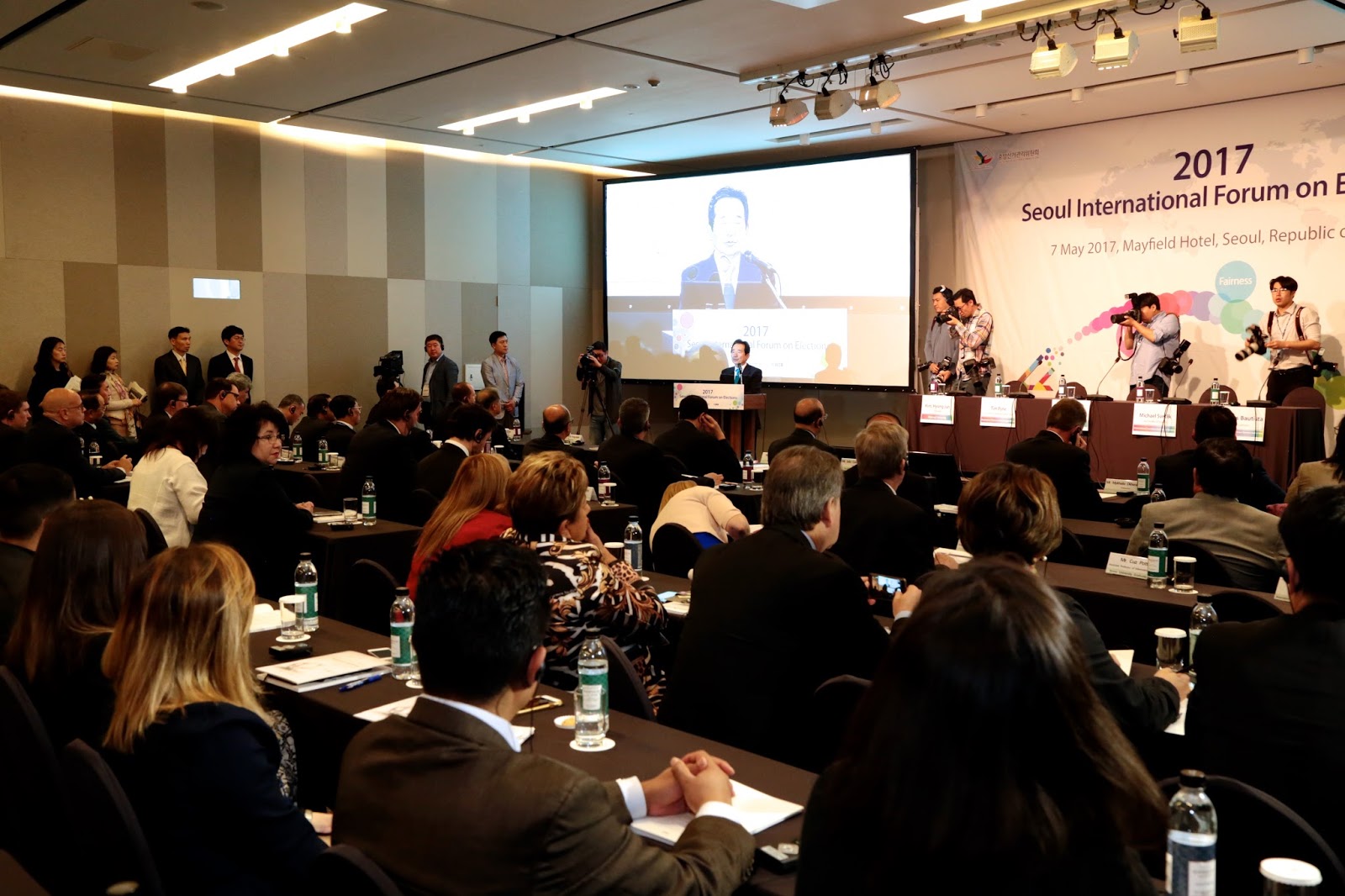
In line with the early presidential election held on May 9, the Administration and International Affairs Division here at the NEC moved forward its other major annual event, the Seoul International Forum on Elections, or SIFE for short. This year’s forum also included a large-scale cultural event in the evening, including an election-related fashion show put on by world-class designer Lei Sang-bong, as part of the NEC’s ‘Beautiful Elections, Happy Korea’ drive during the election.

The forum itself was attended by over 120 election officials and experts that were in Korea for the 19th presidential election as part of our own Election Visitor Program, training programs held by the Association of World Election Bodies (A-WEB) and other training programs developed by the Korean Civic Education Institute for Democracy (KOCEI). This gave us a very diverse set of participants from around the world which contributed to an atmosphere of learning and sharing of knowledge throughout.

2017 SIFE was split into three different sessions that covered three different topics that the NEC considers the most pressing issues facing to election management bodies around the world today. The schedule was carefully devised and world-renowned presenters and panelists were chosen according to their expertise to put forward ideas and initiate discussions.

The schedule looked like this:

09:30–10:00
Opening Ceremony

Opening Remarks
Yong-deok Kim, Chairperson of the National Election Commission
Congratulatory Remarks
Sye-kyun Chung, Speaker of the National Assembly of the Republic of Korea
Eric Walsh, Canadian Ambassador to the Republic of Korea
Yong-Hi Kim, Secretary General, Association of World Election Bodies
10:00–12:00
Session One: Current Trends and Measures to Develop Policy-focused Elections

Moderator
Mr. Hans Schattle, Professor of Political Science, Yonsei Unviersity
Speakers
Mr. Hyung-jun Kim, Professor of Political Science, Myongji University
Mr. Tim Pyne, First Assistant Parliamentary Budget Officer, Australian Parliamentary Budget Office
Mr. Michael Svetlik, Vice President of Programs, International Foundation for Electoral Systems (IFES)
Mr. Andres D. Bautista, Chairperson of the Association of Asian Election Authorities (AAEA)
12:00-13:30
Lunch
13:30-15:00
Session Two: Expanding the Freedom of Expression in Politics: Potential Measures and Challenges

Moderator
Mr. Myoungho Park, Professor, Dongguk University
Speakers
Mr. Gerardo Antonio de Icaza, Director, Organization of American States (OAS)
Mr. Bakary Fofana, President, Independent National Electoral Commission of the Republic of Guinea (CENI)
Mr. Régis Dandoy, Assistant Professor, Waseda University
Ms. Leena Rikkilä Tamang, Director for Asia and the Pacific, International Institute for Democracy and Electoral Assistance (International IDEA)
15:00-15:30
Coffee Break
15:30-17:00
Session Three: Improving Civic Participation in Politics and Elections for the Development of Democracy

Moderator
Mr. Cuz Potter, Associate Professor, Korea University Graduate School of International Studies
Speakers
Mr. Tim Meisburger, Director of Elections and Political Processes, The Asia Foundation
Mr. Namui Moon, Director of Programs, Association of World Election Bodies (A-WEB)
Ms. Ketevan Karenashvili, International Relations Specialist, Central Election Commission of Georgia (CEC)

As you can see from the list of moderator and presenters, there was a diverse and experienced lineup for each session. Our first session, which focused on how to make elections more focused on policies than image, mixed four experts from diverse backgrounds. Hyung-jun Kim, Professor of Political Science, at Myongji University, brought his expertise from an academic standpoint, while Tim Pyne discussed his experience as a senior member of the Australian Parliamentary Budget Office, which scores political parties’ manifestos and policies to support them in presenting policies to the public that have been costed and financially tested.  Meanwhile Michael Svetlik, Vice President of Programs at the world-renowned International Foundation for Electoral Systems (IFES) and Andres D. Bautista, Chairperson of the Association of Asian Election Authorities (AAEA) and the Philippine Commission on Elections (COMELEC) provided their opinions based on their work at an international organization and an EMB respectively. 


Session two took place after lunch and also featured a panel with a similar make-up to discuss the freedom of expression in politics, specifically how to expand it and how to deal with some of the side-effects of this expansion.  This time the academic among the panel was Regis Dandoy from Waseda, who has previously worked with A-WEB before during their program in Ecuador. He was joined by Leena Rikkila Tamang, the Asia and Pacific Director for International Institute for Democracy and Electoral Assistance (International IDEA), and Gerardo Antonio de Icaza, Director of the Organization of American States (OAS), who brought their experience from working in two of the major democracy and election-related organizations from around the world. Completing the panel was Bakary Fofana, President of the Independent National Electoral Commission of the Republic of Guinea (CENI), an organization that has participated in training programs in Korea in the past and has developed a good relationship with the NEC. 

The final slightly shorted session was a discussion on civic participation and included three representatives well-known to the NEC. Tim Meisburger, Director of Elections and Political Processes at the Asia Foundation, started off the panel with his extension experience in the field of strengthening elections and civil society in Asia and a regular participant in various NEC EVP programs. He was joined by Namui Moon, Director of Programs at A-WEB and Ketevan Karenashvili from the Central Election Commission of Georgia (CEC), who also host an annual forum themselves and have regularly invited the NEC to speak and attend. 

Each session consisted on either three or four presentations followed by a discussion period based on  what had been said by the panel of experts. This allowed for structured and focused discussions on the topics at hand and allowed the gathered experts and election officials to share their knowledge and experience throughout the sessions.  We feel confident that everyone that participated left the forum with a few ideas to expand upon in their own work. 
But this year’s forum did not end there. Our division worked closely with other parts of the NEC including the media division to host a cultural event in the evening, including an election-related fashion show developed by world-class designer Lei Sang-bong. This event was part of the NEC’s ‘Beautiful Elections, Happy Korea’ drive during the election, encouraging participating in the vote through various promotional and cultural programs. 

This cultural event held a dual purpose. Firstly, it introduced Korean election culture and elements of Korean culture in general to the delegates from the forum in an interesting and innovative way using dance, fashion and music. Secondly, this event promoted the election to a wider Korean audience, hopefully informing the general public more about the election system and the election itself. 

The highlight was the main fashion show, showcasing Lei Sang-bong’s designs inspired by traditional Korean culture and the Hangul alphabet. He added designs specifically related to the election that impressed the audience, and other musical and dance showcases from some of Korea’s most talented performers contributed to a fascinating and enjoyable evening! 

We want to thank everyone who participated in and contributed to both the forum and the cultural event, we were delighted in the outcome and look forward to continue to host this important event in the future. 

Enjoy some more great photos below!

Author: Luke Butcher, Administration and International Affairs Division


Tuesday, 20 June 2017

2017 Election Visitor Program for the 19th Presidential Elections

6/20/2017

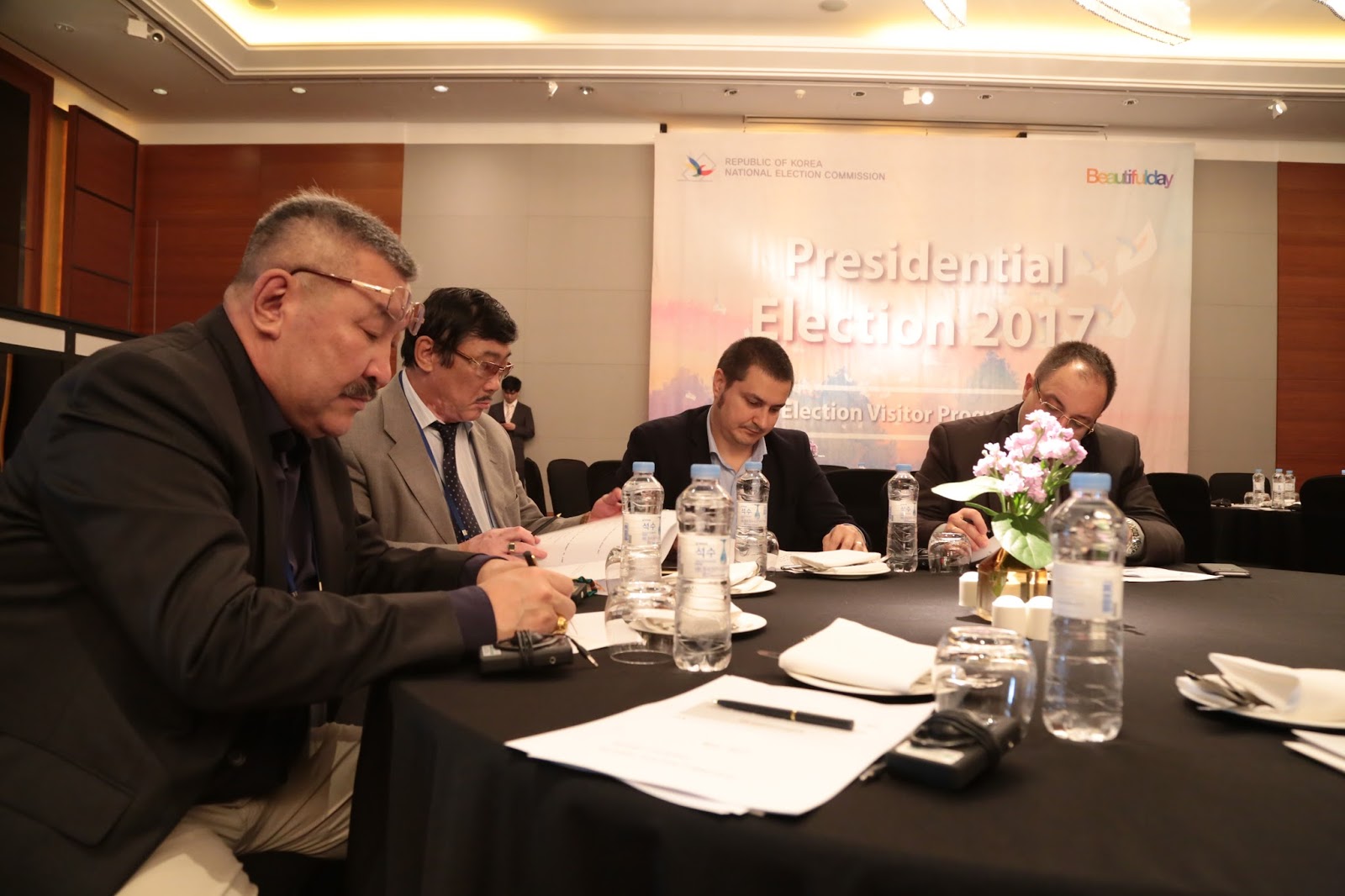
Back in the first and second week of May, the staff here in the Administration and International Affairs Division were delighted to host the Election Visitor Program for the 19th Presidential Election. This important election, which was scheduled for December 20 but brought forward after the former President was impeached in April, was an opportunity for the NEC to host election management bodies (EMBs) and international organizations from around the world to enlighten participants about the Korean election system and encourage the sharing of knowledge and best practices. 

Unlike traditional election observations, the NEC’s International Election Visitor Program, or EVP for short, focuses on exchanging election knowledge and experience between the NEC and participants, and among the participants themselves. The NEC provided funding and support to invite participants from EMBs in transitional or young democracies to encourage the development of election management practices and also international organizations involved in election management in democracy. The EVP is all about learning, strengthening capacity and continuing to build a worldwide family of election management experts. 

The 2017 program lasted for around a week, allowing participants to be briefed before voting and to observe both early voting and the voting process on election day. The schedule was designed to ensure the participants had a mix of direct experience of election management and discussions together with other participants and the major democracy-related institutes in Korea. The packed schedule was as follows:


May 4
(Thu)
May 5
(Fri)
May 6
(Sat)
May 7
(Sun)
May 8
(Mon)
May 9
(Tue)
May 10
(Wed)
Morning
Participants Arrived and Registered
Opening ceremony and mock early voting
Visited Lotte Tower and watched election campaigning
Participated in the Seoul International Forum on Elections
Visited the Korean Civic Education Institute for Democracy (KOCEI)
Viewed the opening of polling stations
Closing briefing
Afternoon
Visited early voting polling stations
Visited Gyeongbuk Palace and watched election campaigning
Visited the NEC and the National Assembly
Visited polling stations during voting and counting stations in the evening
Participants departed

With early voting taking place Thursday and Friday, participants started the first full day of the program with a full description of the Korean election system and mock early voting set up by the NEC. Election officials were walked through the voting process step-by-step and were able to cast their ballot paper in our mock vote! The example also showcased the various technology that has been introduced by the NEC into the Korean election system over the past decade, including the ballot paper printer that is used in the polling station during early voting and the optical scan ballot sorting machine used in counting. 

The weekend was a slightly more relaxed but no less productive period for the participants. Saturday gave everyone chance to unwind and recover from their long flights, spending some time learning about Korean culture, visiting various sights in Seoul and also taking a stop by some of the campaigning going on around the city. With everyone in the swing of the program, on Sunday the participants all joined the Seoul International Forum on Elections 2017 and cultural event at the Mayfield Hotel, another of our major events of the year. More will be coming about that soon!

The real heart of the program came from Monday to Wednesday. Monday was a day of a lot of travel and meetings at the KOCEI office, the NEC and the National Assembly. Split into three groups and rotating around the offices to ensure that everyone had a chance to discuss the issues at hand. The election day then finally arrived on Tuesday, and it was early start to watch the opening of the ballot boxes in the early hours of the morning at 6am. After a bit of rest after dawn rise, participants spent the afternoon visiting polling stations in their small groups before watching the closing of polls at the later hour of 8pm (due to this being a special election). Everyone then moved together with ballot boxes to the counting center to view the counting, ensuring that all participants were able to view every single stage the election process in great detail. 

To wrap up, everyone gathered back together on Wednesday morning before they departed to present their ideas and observations from election day. There was a good deal of discussion about the differences between Korea’s election system and the participant’s own systems as well as ideas on best practices. With the high level of expertise present at the EVP, including senior level officials from various EMB’s as well as international experts, the level of discussion was very high and everyone at the NEC was delighted that everyone appeared to find the program very productive. 

We would like to thank every single one of the 36 EMB’s and organizations and all the participants that flew a long way to be here in Korea for this important election. The NEC will continue to both hold and participate in events such as these to share knowledge and experience and be part of an every growing community of like-minded EMBs focused on developing democracy. 


Contact Form

Name

Email *

Message *

Blog Archive